
Description
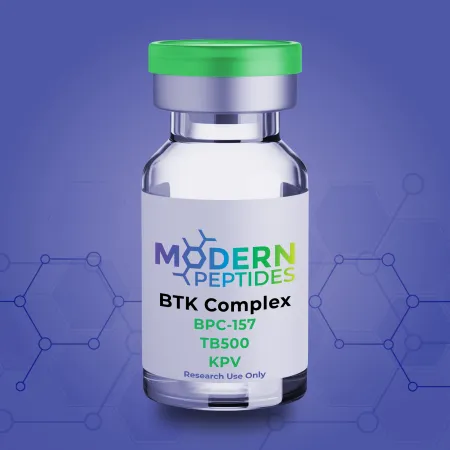
The BTK Complex: A Deep Dive into BPC-157, TB-500, and KPV
In the evolving world of regenerative medicine and biohacking, the BTK Complex has emerged as a powerhouse trio. By combining three distinct peptides—BPC-157, TB-500, and KPV—this stack aims to provide a synergistic approach to healing, systemic inflammation reduction, and tissue repair.
Here is a breakdown of why this combination is gaining significant traction.
1. BPC-157: The “Body Protection Compound”
Derived from a protein found in human gastric juice, BPC-157 is widely regarded as the “king of healing peptides.” It is primarily known for its ability to accelerate the repair of “soft tissues” that typically receive poor blood flow.
-
Primary Benefits: Repairs tendons, ligaments, and muscle tears.
-
Mechanism: It promotes angiogenesis (the formation of new blood vessels) and upregulates growth factor receptors.
-
Gut Health: Effectively treats “Leaky Gut,” IBS, and gastric ulcers.
2. TB-500 (Thymosin Beta-4)
While BPC-157 focuses on the site of injury, TB-500 is highly mobile, moving through the system to identify and repair damaged tissues. It is a synthetic version of a naturally occurring peptide present in virtually all human cells.
-
Primary Benefits: Increases flexibility, reduces joint inflammation, and improves recovery time.
-
Mechanism: It works by actin sequestration, a process that helps build the cellular structure and promotes cell migration to injured areas.
-
Synergy: When paired with BPC-157, TB-500 acts as the “courier,” while BPC-157 acts as the “builder.”
3. KPV (Lysine-Proline-Valine)
KPV is a potent anti-inflammatory tripeptide derived from Alpha-Melanocyte Stimulating Hormone ($\alpha$-MSH). It is the “secret weapon” in the BTK complex for calming the immune system.
-
Primary Benefits: Potent anti-inflammatory, antimicrobial properties, and skin healing.
-
Mechanism: KPV enters the cell and interacts with inflammatory signaling pathways (like NF-$\kappa$B), effectively shutting down the “cytokine storm” that causes chronic pain and swelling.
-
Mast Cell Support: It is particularly useful for those dealing with MCAS (Mast Cell Activation Syndrome) or histamine intolerance.
Why Combine Them into the BTK Complex?
Using these three peptides together creates a multidimensional healing environment that a single peptide cannot achieve alone.
| Peptide | Core Function | Target Area |
| BPC-157 | Structural Repair | Tendons, Ligaments, Gut Lining |
| TB-500 | Cellular Migration | Systemic Recovery, Muscle, Heart |
| KPV | Immune Modulation | Systemic Inflammation, Skin, Gut |
Key Benefits of the Stack:
-
Accelerated Post-Surgery Recovery: Drastically reduces the downtime following orthopedic procedures.
-
Chronic Injury Management: Addresses “old” injuries that never properly healed due to poor blood flow or persistent inflammation.
-
Gastrointestinal Healing: Provides a “double-hit” against gut inflammation (BPC-157 repairs the wall; KPV calms the immune response).
Common Administration & Dosage
While protocols vary based on individual needs, the BTK complex is most commonly found in injectable or oral (capsule) forms.
-
Injectable: Offers higher bioavailability for localized tissue repair.
-
Oral: Often preferred for GI-specific issues or systemic inflammation management.
Important Note: Peptides are currently classified as “Research Chemicals” in many jurisdictions. Always consult with a healthcare professional before starting a peptide protocol to ensure safety and proper dosing.
The BTK Complex represents the frontier of restorative science. By targeting blood vessel growth (BPC-157), cellular mobility (TB-500), and inflammatory signaling (KPV), it offers a comprehensive toolkit for anyone looking to optimize their recovery and longevity.
Reviews
There are no reviews yet.