
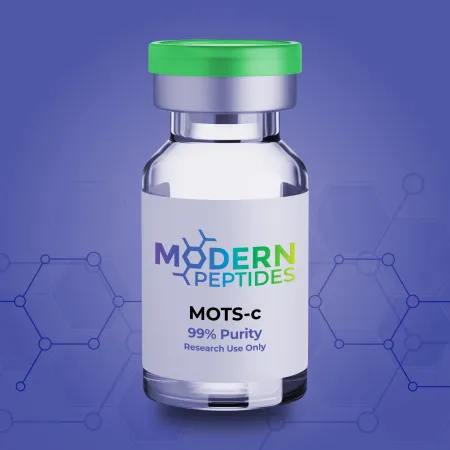
Description
What is MOTS-c? The “Exercise Mimetic” Mitochondrial Peptide
MOTS-c (Mitochondrial Open Reading Frame of the 12S rRNA-type-c) is a 16-amino acid peptide that represents a paradigm shift in how we understand cellular communication. Unlike most peptides encoded in the cell’s nucleus, MOTS-c is unique because it is encoded within the mitochondrial DNA.
Often referred to as an “exercise mimetic,” MOTS-c signals the body to respond in ways similar to physical activity—optimizing energy use, burning fat, and improving insulin sensitivity. As we age, natural levels of MOTS-c decline, which is increasingly linked to age-related metabolic issues and decreased physical vitality.
Buy MOTS-c Peptide Online in USA: The Ultimate Buyer’s Guide to Quality & Purity
If you have been looking into the world of mitochondrial health, cellular energy, or longevity, chances are you’ve come across MOTS-c. Often called the “exercise mimetic” or the “mitochondrial peptide,” It has quickly become one of the most talked-about compounds in modern metabolic research.
But as its popularity surges, so does the number of online vendors claiming to sell the real thing. Navigating the market to buy MOTS-c safely can feel overwhelming.
In this guide, we will break down exactly what This product is, what the science says about its benefits, and how to spot high-quality, pure peptides so you don’t waste your money or compromise your research.
How Does MOTS-c Work?
MOTS-c acts as a metabolic messenger. When the body experiences stress or exercise, this peptide moves from the mitochondria to the nucleus to regulate gene expression. Its primary mechanism is the activation of the AMPK pathway (Adenosine Monophosphate-activated Protein Kinase), often called the body’s “master metabolic switch.”
Why Researchers and Biohackers are Looking to Buy MOTS-c
Research into this product has revealed a broad range of potential health benefits, particularly for those looking to optimize their metabolic “machinery.”
1. Enhanced Metabolic Flexibility & Weight Loss
MOTS-c helps the body switch efficiently between burning carbohydrates and fats. Studies, such as the landmark 2015 study in Cell Metabolism, showed that It could prevent high-fat-diet-induced obesity in mice by increasing energy expenditure without changing caloric intake.
2. Improved Insulin Sensitivity
By activating AMPK, MOTS-c enhances glucose uptake in skeletal muscle. This makes it a significant area of interest for managing insulin resistance and supporting healthy blood sugar levels, similar to the effects of the diabetes drug metformin.
3. Physical Performance & Recovery
As an exercise-induced peptide, MOTS-c supports:
-
Increased Endurance: Improves the capacity for physical exertion.
-
Faster Recovery: Aids in repairing muscle tissue after strenuous workouts.
-
Skeletal Muscle Health: Helps prevent muscle wasting (sarcopenia) associated with aging.
4. Longevity and Anti-Aging
By maintaining mitochondrial-nuclear communication, MOTS-c helps preserve cellular “resilience.” It has been shown to reduce markers of systemic inflammation and may protect against age-related decline in various organ systems.
MOTS-c Research: What the Science Says
While human clinical trials are still in the early stages, the preclinical data is compelling:
-
Mice Studies: Research published in Nature Communications (2021) demonstrated that the treatment improved physical performance in mice across all age groups—young, middle-aged, and old.
-
Human Observations: Studies have found that serum MOTS-c levels correlate with muscle mass and strength in humans. Interestingly, lower levels of The product have been observed in individuals with obstructive sleep apnea (OSA) and sedentary lifestyles.
Frequently Asked Questions About MOTS-c.
Is MOTS-c legal to buy?
In most jurisdictions, including the United States, this product is fully legal to purchase online as a research chemical or for laboratory research use only. It is not currently approved by the FDA for human consumption, meaning you won’t find it at your local commercial pharmacy.
What is the standard vial size?
The most common and cost-effective size you will find from premium vendors is a 10mg vial.
How should it be stored?
In its raw, freeze-dried powder form, un-reconstituted MOTS-c can safely sit at stable room temperatures during shipping for several weeks. However, for long-term storage, it should be kept in a freezer. Once you mix it with bacteriostatic water, it must stay in the refrigerator and be used within a few weeks.
Do You Offer Bulk Order Discount?
Yes we do! Get the most out of your research with our attractive bulk pricing options. Simply contact us at Info@floridapeptides.us Our team will work with you to ensure you receive the best value for your research
Do You Offer Bulk Order Discount?
Yes we do! Get the most out of your research with our attractive bulk pricing options. Simply contact us at Info@floridapeptides.us Our team will work with you to ensure you receive the best value for your research needs, Check our shop page for amazing peptide products.
-
Is MOTS-c a steroid? No, it is a peptide (a chain of amino acids), not a hormone or steroid.
-
Can It help with brain fog? Many users report improved mental clarity, likely due to enhanced cellular energy (ATP) production.
-
Where is MOTS-c naturally found? It is produced in the mitochondri
Can I order from Florida peptides safely?
Yes you should be confident to order from us because we don’t just offer you great products we top it by making sure your products get to you safely, & correctly. We ship within the us and our products are shipped in protective plastic clamshells inside a quality product box that is sealed for protection. The box is placed into a fitted bubble sleeve that is sealed and finally packaged safely into crush-proof B-fluted cardboard box mailers. we are confident your order will arrive in the best condition possible and can always rely on a good experience with us.
Dosage, Administration, and Safety
Important: MOTS-c is currently classified as an experimental compound. It is not FDA-approved for human use and is banned by the World Anti-Doping Agency (WADA) for competitive athletes.
Typical Protocols
In “research” and wellness clinic settings, it is usually administered via subcutaneous injection. Common protocols often include:
-
Dose: 5mg to 10mg per week.
-
Frequency: Often split into 2–3 injections per week.
-
Cycle Length: 4 to 8 weeks, followed by a break.
Potential Side Effects
Reported side effects are generally mild but can include:
-
Injection site irritation or redness.
-
Increased heart rate or temporary “flushing.”
-
Insomnia (if taken late in the day).
Reviews
There are no reviews yet.