
Description
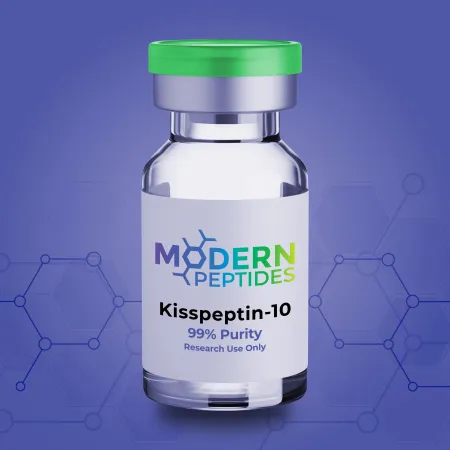
Premium Kisspeptin-10 Peptide High Purity Research Grade
Kisspeptin-10 (KP-10) is often referred to as the “master controller” of the reproductive system. As the shortest and most biologically active fragment of the Kisspeptin protein family, it plays a vital role in triggering the hormonal cascade necessary for puberty, fertility, and testosterone production.
Unlock advanced scientific insights with our ultra-pure Kisspeptin-10 (KP-10) peptide. Known as a crucial gatekeeper of the reproductive system, Kisspeptin-10 is a potent, truncated peptide derived from the parent KISS1 gene product. It is highly sought after in laboratory research for its profound role in stimulating the Hypothalamic-Pituitary-Gonadal (HPG) axis and regulating hormone signaling.
Our Kisspeptin-10 is synthesized under strict quality control standards, ensuring maximum stability, exceptional purity, and reproducible results in your in vitro or in vivo studies.
What is Kisspeptin-10?
Kisspeptin-10 is a neuropeptide consisting of 10 amino acids. It is derived from the KISS1 gene, which was originally discovered for its ability to suppress the spread (metastasis) of cancer. However, scientists later found that its primary role in humans is regulating the Hypothalamic-Pituitary-Gonadal (HPG) axis.
Key Product Features
-
Maximum Purity: 98% purity confirmed via HPLC and Mass Spectrometry analysis.
-
Potent Activity: The active 10-amino acid sequence ($YNWNSFGLRF-NH_2$) offers high affinity for the KISS1 receptor (GPR54).
-
Lyophilized for Stability: Freeze-dried to preserve structural integrity during transit and long-term storage.
-
Zero Fillers: Free from additives, blends, or contaminants.
How Does Kisspeptin-10 Works?
The mechanism of action follows a precise hormonal hierarchy:
-
Hypothalamus: Kisspeptin-10 stimulates GnRH-releasing neurons.
-
Pituitary Gland: GnRH travels to the pituitary, triggering the release of Luteinizing Hormone (LH) and Follicle-Stimulating Hormone (FSH).
-
Gonads: These hormones signal the testes (to produce testosterone and sperm) or the ovaries (to produce estrogen and trigger ovulation).
Key Benefits of Kisspeptin-10 and Research Areas
1. Fertility Restoration
Because KP-10 stimulates the natural, pulsatile release of GnRH, it is being studied as a treatment for infertility. Unlike synthetic hormones that can “shut down” the body’s natural production, Kisspeptin encourages the body to produce its own hormones. It is particularly promising for:
-
Hypothalamic Amenorrhea: Restoring menstrual cycles in women where stress or low body weight has halted ovulation.
-
IVF Support: Triggering egg maturation with a lower risk of Ovarian Hyperstimulation Syndrome (OHSS) compared to traditional hCG triggers.
2. Testosterone Optimization
In men, Kisspeptin-10 has been shown to increase LH pulses and subsequent testosterone levels. It is often discussed in the context of Post-Cycle Therapy (PCT) or as an alternative to TRT (Testosterone Replacement Therapy) for those looking to maintain fertility while boosting hormone levels.
3. Metabolic and Mental Health
Recent studies suggest Kisspeptin-10 may have effects beyond reproduction:
-
Weight Management: Research indicates it may interact with leptin (the “fullness” hormone) to regulate energy balance.
-
Mood & Libido: Because Kisspeptin receptors are found in the amygdala (the brain’s emotional center), it is being investigated for its role in enhancing sexual desire and reducing anxiety.
Kisspeptin-10 vs. Kisspeptin-54
While both come from the same precursor, they differ in half-life and potency:
-
Kisspeptin-10: The “fast-acting” version. It has a very short half-life (roughly 4 minutes), making it ideal for acute stimulation or diagnostic testing.
-
Kisspeptin-54: The full-length protein. It lasts longer in the bloodstream (around 28 minutes) and is more commonly used in prolonged clinical trials.
Buy Kisspeptin-10 Peptide – Premium Quality, High Purity (10mg)
Discover the power of advanced peptide research. When you buy Kisspeptin-10 from Florida Peptides, you are investing in a premium-grade, highly purified peptide designed for rigorous laboratory and scientific evaluation.
Kisspeptin-10 (also known as metastin) is a crucial regulator in the neuroendocrine system, widely studied for its profound impact on the hypothalamic-pituitary-gonadal (HPG) axis and reproductive hormone regulation.
Potential Side Effects
While generally well-tolerated in clinical settings, some users report:
-
Temporary flushing or “head rush.”
-
Mild injection site irritation.
-
Over-stimulation of the HPG axis if used excessively (which could lead to receptor desensitization).
Order Premium Peptides Online – Highest Purity & Quality
We are your trusted source for high-purity research peptides online. We specialize in providing researchers, laboratories, and institutions with the highest caliber of synthesized compounds. Every batch undergoes rigorous testing to ensure unmatched stability, identity, and analytical purity for your laboratory applications.
Browse our extensive shop page of lyophilized peptides, engineered specifically for in vitro and in vivo experimental research.
Frequently Asked Questions (FAQ)
Does Kisspeptin-10 increase testosterone?
Yes, by stimulating the release of LH from the pituitary gland, it signals the Leydig cells in the testes to produce more testosterone.
Is Kisspeptin-10 better than hCG?
They work differently. hCG mimics LH directly, whereas Kisspeptin-10 stimulates the brain to release its own LH. This makes Kisspeptin a more “upstream” and potentially more natural regulator.
How is it administered?
it is typically administered via subcutaneous or intravenous injection due to its peptide structure, which would be broken down by the digestive system if taken orally.
What is the purity level of your peptides?
Every batch of our Kisspeptin-10 undergoes rigorous High-Performance Liquid Chromatography (HPLC) and Mass Spectrometry (MS) testing to guarantee a purity level of 98% or higher. Batch-specific Certificates of Analysis (CoA) are available upon request.
Can this product be used for human consumption?
No. This product is synthesized strictly for laboratory research and development purposes. It is not intended for diagnostic, therapeutic, or human use.
Disclaimer: This product is sold strictly for research and laboratory use only.
Reviews
There are no reviews yet.